

You didn't start a charity to spend your days in spreadsheets.
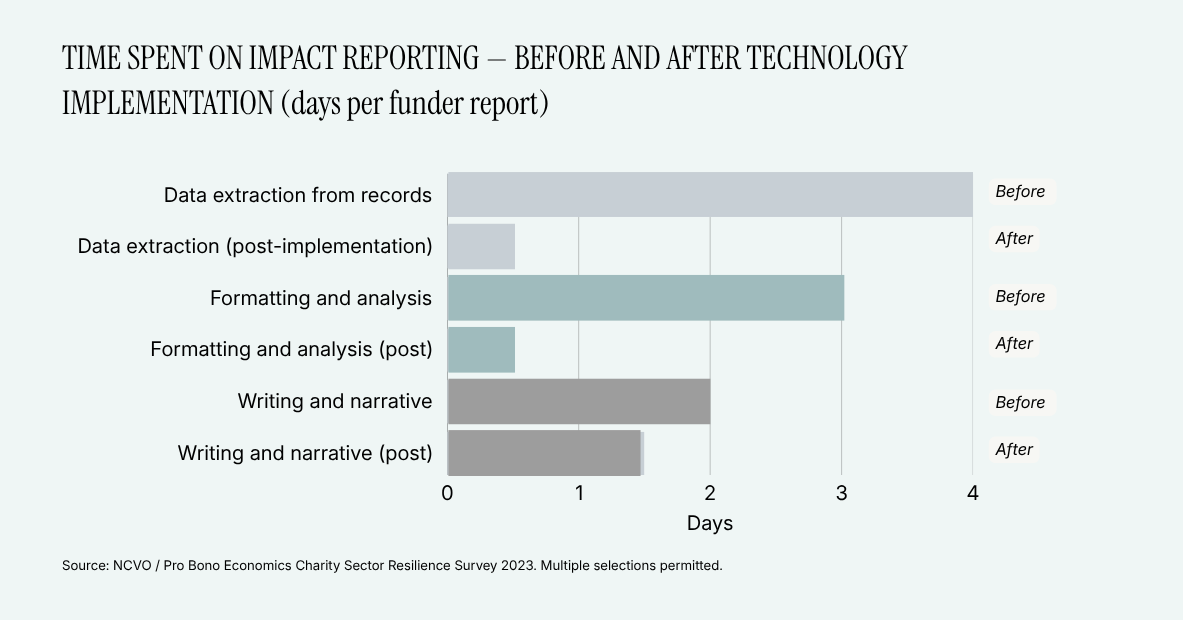
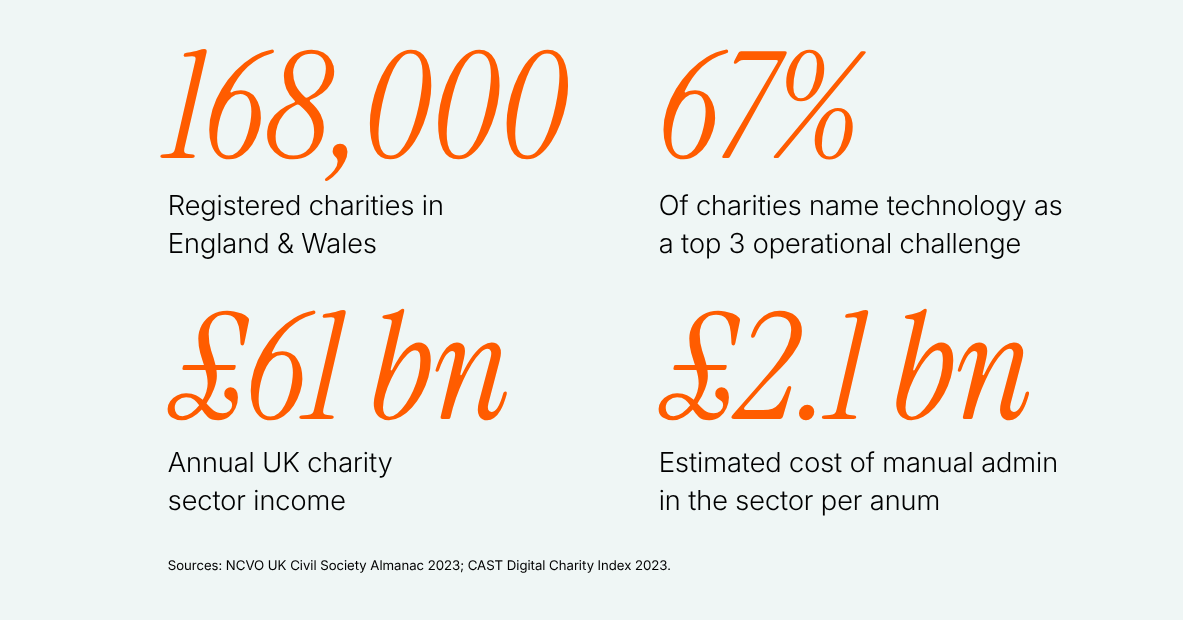
And yet, here we are. For most of the people running charitable organisations in the UK, a significant portion of the working week is consumed by administrative processes that have nothing to do with why the organisation exists: case records that have to be assembled by hand, volunteer rosters managed by email chain, impact reports that take three weeks to compile from five different systems, donor communications that go out identically to everyone because there's no capacity for anything else.
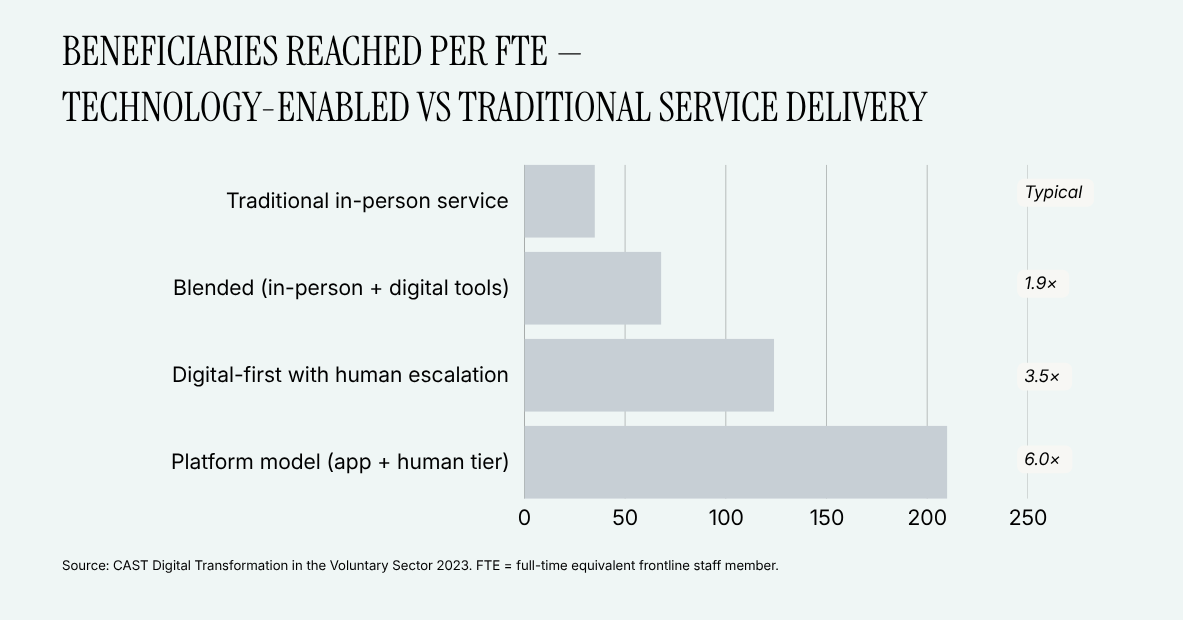
Technology has historically felt like an overhead spend in the charity sector — something that benefits the organisation but doesn't directly serve beneficiaries, and therefore something that funders and trustees look at with a degree of scepticism. That framing is understandable, but it's wrong. The right technology is the opposite of overhead. It's the thing that lets one case worker support sixty families instead of thirty. That lets a field team collect and act on data without a laptop or a reliable signal. That lets a fundraising team reach a hundred thousand supporters with personalised engagement that used to require ten staff members.
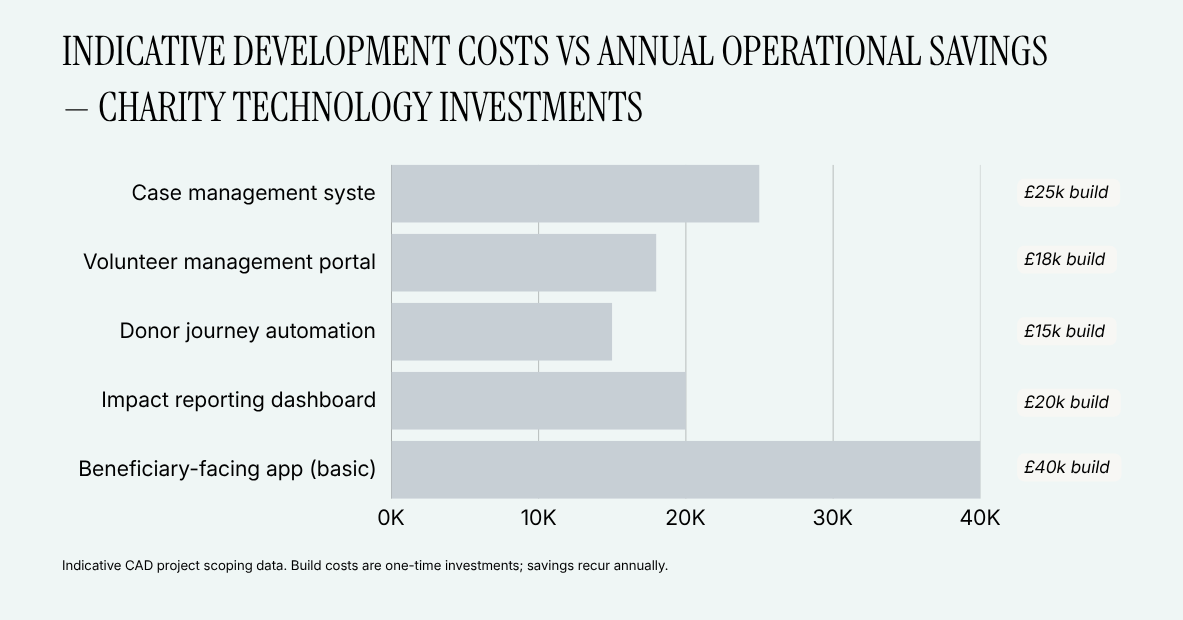
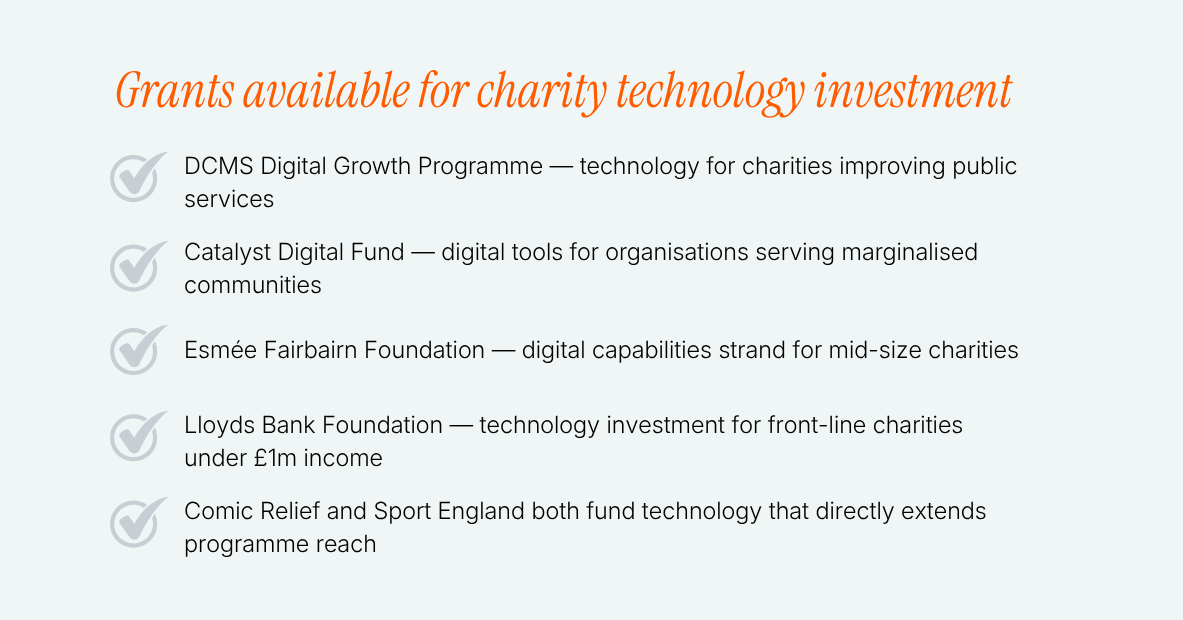
This article covers five specific areas where technology consistently delivers measurable impact-per-pound improvements for charities and NGOs — alongside the honest caveats, the real cost considerations, and a practical guide to getting started without a large technology budget.